
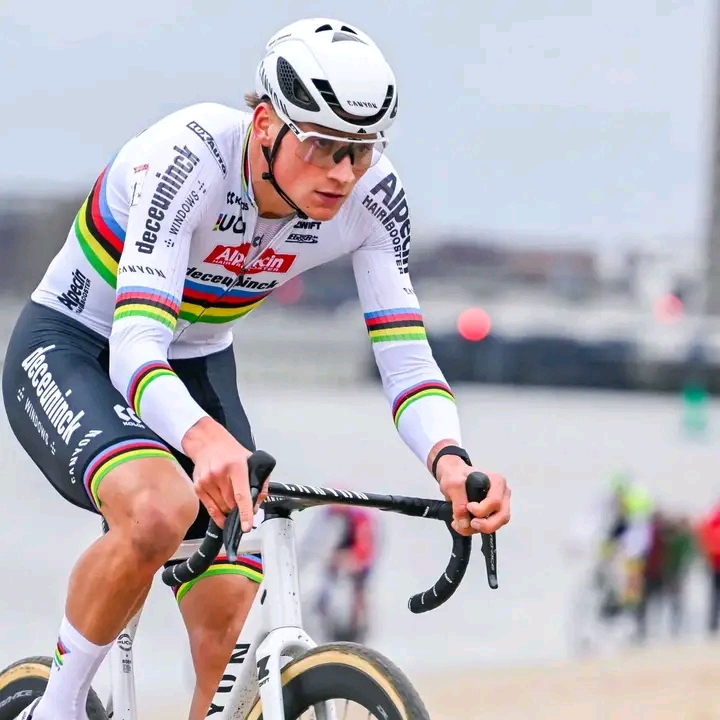
Colombian cycling star Nairo Quintana has sparked debate across the sport after declaring Dutch rider Mathieu van der Poel “the strongest rider in cycling history,” adding that even at his own peak, he would have fallen “two steps below” the all-round brilliance of the Alpecin-Deceuninck leader.
Quintana, a former Grand Tour winner renowned for his climbing prowess, made the comments during a recent interview reflecting on the evolution of modern cycling. The 35-year-old pointed to van der Poel’s rare versatility—his ability to dominate across classics, cyclocross, and stage races—as something the sport has never quite seen before.
“Cycling has changed,” Quintana said. “Riders today are more complete, but Mathieu is something different. He combines power, endurance, and technique at a level that is extraordinary.”
Van der Poel, already a multiple Monument winner and world champion across disciplines, has built a reputation for explosive performances and tactical intelligence. His aggressive racing style and capacity to perform on varying terrains—from cobbled classics to punchy climbs—have set him apart from both his contemporaries and past legends.
Quintana’s remarks have drawn mixed reactions within the cycling community. Some analysts agree that van der Poel represents a new archetype of rider, capable of excelling in ways previous generations could not. Others argue that comparing eras remains inherently difficult, given differences in training, technology, and race dynamics.
Still, Quintana’s admission carries weight, given his own achievements in races like the Giro d’Italia and Vuelta a España. His acknowledgment highlights the growing recognition of van der Poel’s impact on the sport.
As cycling continues to evolve, the debate over the greatest rider in history remains open—but voices like Quintana’s are increasingly placing van der Poel firmly in that conversation.
About The Author

